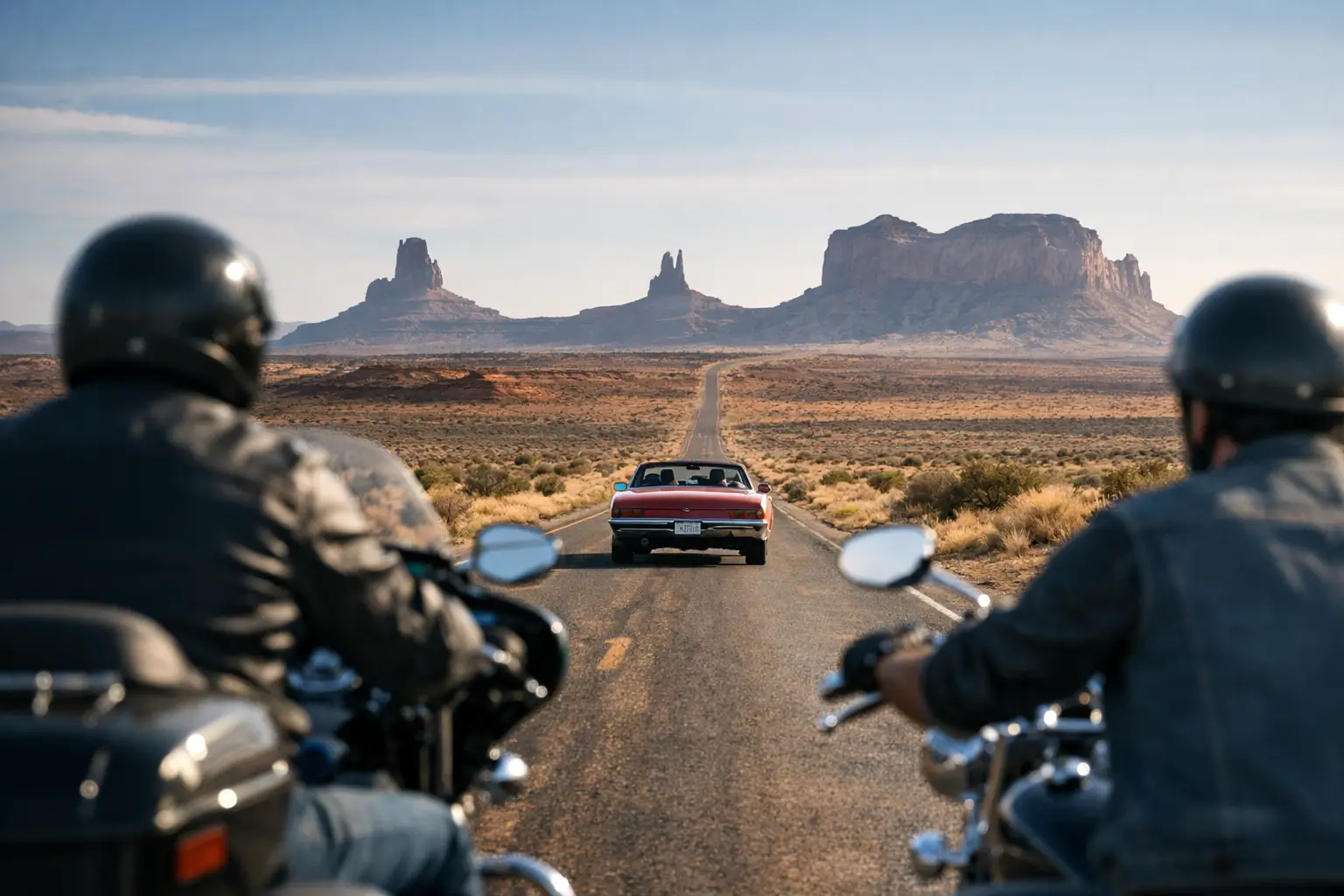
The mistake most people make with Route 66 is treating it like a straight line on a map. It is not. If you want to understand how to ride Route 66, you have to approach it as a living story - one told through neon signs, old motor courts, desert wind, diner coffee, tribal lands, railroad towns, and long stretches where the road feels bigger than time.
That is what makes this trip different from an ordinary vacation. Route 66 is not about getting somewhere fast. It is about crossing America in a way that still feels personal.
How to ride Route 66 without missing the point
You can ride Route 66 on a motorcycle or travel it by car, and both experiences are unforgettable. The better choice depends on what kind of freedom you want. On a bike, every mile is physical. You feel the temperature swing when you leave a cool morning in Missouri and roll into the dry heat of the Southwest. You smell the rain before it arrives. You remember the road with your whole body.
In a car, the trip opens up in a different way. You get more weather protection, more luggage space, and a little more flexibility if you want a slower pace. For couples, first-time cross-country travelers, or anyone who wants the Route 66 atmosphere without the demands of long riding days, a self-guided car trip often makes more sense.
Neither style is more authentic than the other. The real question is how much comfort, challenge, and structure you want.
Start with the rhythm, not just the route
A full Route 66 journey is about 2,400 miles, stretching from Chicago to Santa Monica. On paper, that sounds simple enough. In practice, the experience changes dramatically based on your pace.
If you rush it in a week, you will cover ground, but you will not really feel the road. If you give it two weeks or more, the trip starts to breathe. You have time to stop in places that would otherwise become names on a sign - Pontiac, Tucumcari, Winslow, Seligman, Kingman. You can sit in an old cafe, talk to the owner, and hear the kind of local stories that never make it into guidebooks.
The sweet spot for many travelers is around 14 to 16 days. That gives you enough time to enjoy the major highlights across eight states while still leaving room for detours, weather changes, and the occasional stop that was never in the original plan.
Choose guided or self-guided with honesty
One of the biggest decisions in how to ride Route 66 is whether to go guided or do it on your own.
A guided motorcycle tour is ideal if you want the classic American road trip with the logistics handled. That means the route is planned, hotels are arranged, luggage support is built in, and you can focus on the ride itself. It also adds something many riders do not think about until they are on the road - shared energy. Riding west with a group of like-minded travelers creates its own momentum. Meals are better, stories get bigger, and the trip becomes something you remember with other people, not just by yourself.
A self-guided tour works well if flexibility matters more. Maybe you want to spend longer in Arizona, move faster through larger cities, or keep the overall cost lower. That format suits car travelers especially well, but it can also appeal to independent riders who are comfortable managing navigation, timing, and day-to-day travel details.
There is no perfect answer here. Some travelers want total freedom. Others want freedom inside a well-built framework. After 14 years of Route 66 travel planning, Route 66 Tours INC has seen both styles work beautifully when they match the traveler.
What a good Route 66 itinerary really looks like
A strong itinerary balances iconic stops with breathing room. Chicago deserves your attention before you even begin. The architecture, the food, the sense of launch - it matters. From there, Illinois and Missouri ease you into the journey with classic Americana, river towns, and early Route 66 nostalgia.
Oklahoma and Texas bring wide skies and a different tempo. The road starts to stretch. The towns feel further apart. By New Mexico, the colors shift and the landscape begins to feel cinematic. Arizona is where many travelers fall hardest for the trip. You get high desert, old trading posts, vintage signs, and some of the best-preserved stretches of the Mother Road. Then California gives you the long closing chapter - desert first, then sprawl, then finally the Pacific.
A weak itinerary tries to cram too much into each day. A good one leaves room for moments that cannot be scheduled, like pulling over just to watch the late light hit an old gas station or hearing a jukebox song in a roadside bar that somehow fits the whole day.
Plan for the road you are actually riding
Route 66 is famous, but it is not one continuous, perfectly preserved road. Some sections are intact and glorious. Others blend into interstates, frontage roads, or broken historic alignments. That is part of the adventure, but it also means navigation matters.
If you are riding a motorcycle, daily mileage needs to be realistic. A 300-mile day on Route 66 can feel very different from 300 miles on a modern highway. You are stopping more, slowing for towns, taking photos, and watching for old alignments. The road invites curiosity, and curiosity takes time.
Weather is another factor people underestimate. Spring and fall are often ideal, with better temperatures across much of the route. Summer can be fantastic, but the desert sections in Arizona and California can be brutally hot, especially for riders in full gear. If you are traveling by car, heat is easier to manage, but it still affects energy and pacing.
The best parts of Route 66 are often the small ones
Everybody knows the headline stops. The Santa Monica Pier. Cadillac Ranch. The Blue Whale. The Wigwam Motel. They are worth seeing. But Route 66 becomes unforgettable in the quieter places between the famous landmarks.
It is the hand-painted mural in a town you had never heard of. The pie at a diner that has survived three generations of highway change. The old motel owner who remembers when the road was packed every summer. The abandoned sign half-tilted in the wind, still beautiful because it refuses to disappear.
That is why riding Route 66 asks for more than a packed checklist. You need enough openness to let the road surprise you.
How to ride Route 66 well on a motorcycle
For riders, the appeal is obvious. Route 66 gives you the grand American ride - changing landscapes, long horizons, and that deep satisfaction that only comes from earning the miles.
But a great motorcycle trip is built on pacing and comfort, not bravado. Choose riding days that leave energy for the evening. Stay hydrated before you feel thirsty. Pack light, but not carelessly. If your trip includes long desert segments, cooling layers and proper planning matter more than style points.
Group riding has advantages, especially on a cross-country route. It reduces stress, builds confidence in unfamiliar stretches, and lets you focus on the experience rather than every decision. Solo riding, on the other hand, gives you a rare kind of intimacy with the road. Neither is better. It depends on whether you want camaraderie or solitude to shape the journey.
How to ride Route 66 by car and still feel the magic
A car trip on Route 66 is not the lesser version. For many travelers, it is the smartest version. You can carry more, adapt to weather more easily, and enjoy the route at a pace that feels relaxed rather than demanding.
This is especially true for couples and international visitors who want the romance of Route 66 with fewer physical demands. A self-guided car tour can still deliver the neon, the diners, the desert sunsets, the mountain air, and the small-town encounters that make the road special. In some ways, the added comfort helps you stay present longer.
The key is to avoid turning it into a highway sprint. Take the old alignments when possible. Stay in historic properties when it makes sense. Stop for the roadside oddities. Route 66 is supposed to feel a little eccentric.
The real reward is bigger than the destination
By the time you reach the Pacific, something subtle has happened. The trip is no longer just about Route 66 itself. It becomes about scale, memory, and the feeling of crossing a country through its backstories rather than its headlines.
That is why people dream about this road for years. It gives you landscapes, yes, but also a rare kind of continuity. You watch America change mile by mile, accent by accent, horizon by horizon. Few trips give you that.
So if you are wondering how to ride Route 66, start with this: give the road enough time, choose the format that suits your style, and leave room for the unexpected. The best Route 66 journeys are not the ones that go fastest. They are the ones that let the road get under your skin.