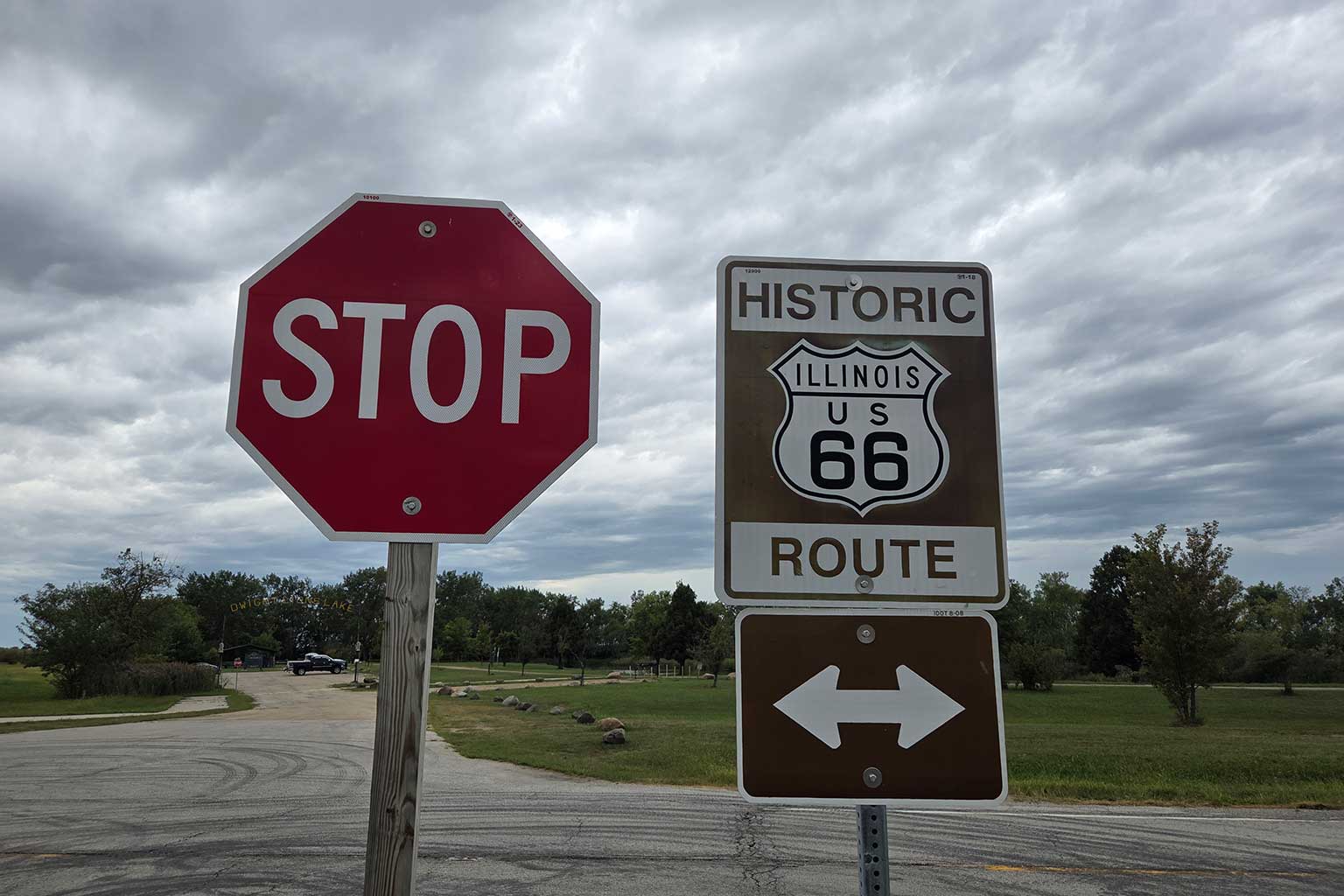
The first morning on Route 66 has a way of making every traveler feel like the road belongs to them. A loaded Harley rumbles at the curb, or a car points toward a long ribbon of pavement, neon signs, diners, desert horizons, and towns with stories still written on their walls. But before that first mile, one question shapes the entire experience: Route 66 eastbound or westbound?
There is no wrong direction. The Mother Road is magnificent either way. Yet the journey feels different when you begin beneath the tall buildings of Chicago and chase the sunset toward Santa Monica than when you leave the Pacific behind and ride into the heartland. Your preferred scenery, travel dates, appetite for big-city energy, and personal idea of a grand finale all matter.
Route 66 Eastbound or Westbound: The Essential Difference
Westbound is the classic dream. You begin in Chicago, where old Route 66 history meets a busy, unmistakably American cityscape, then gradually trade urban streets for Illinois farmland, Missouri curves, Oklahoma plains, Texas panhandle skies, New Mexico trading posts, Arizona red rock, and California desert. The Pacific Ocean waits at the end like a reward earned one mile at a time.
That final arrival at Santa Monica is hard to beat. After crossing eight states and thousands of miles, seeing the ocean beyond the Santa Monica Pier creates a powerful sense of completion. For many first-time travelers, especially those fulfilling a long-held American road-trip dream, westbound delivers the story they have imagined for years.
Eastbound reverses that emotional arc. You start with salt air, palm trees, and the bright California coast, then head through the Mojave Desert toward Arizona, New Mexico, and the wide-open center of the country. The landscape becomes greener and more settled as you move east, and your finale is Chicago's architecture, blues, food, and skyline.
Neither direction is more authentic. Route 66 was never just about getting from one endpoint to another. It is about roadside conversations, a perfect slice of pie, a faded motel sign glowing at dusk, and the small detours that become the stories you tell for decades.
Why Westbound Feels Like the Classic Route 66 Journey
For many travelers, westbound has a natural rhythm. The road opens slowly. Chicago gives you a lively beginning and an immediate sense that something big is underway, but you soon settle into the quieter pleasures of the route: old gas stations, brick main streets, local museums, and towns where Route 66 is still part of daily life.
The scenery also builds toward dramatic terrain. The early days offer rolling country and historic communities. By the time you reach the Southwest, the visual scale becomes enormous. You ride or drive through New Mexico's high desert, cross Arizona's painted landscapes, and feel the heat and space of California's Mojave before the road finally meets the ocean.
That progression is especially satisfying for riders. A motorcycle tour westbound can feel like America gradually widening around you. The road becomes less familiar, the light sharper, and the landscapes more cinematic. You do need to respect the trade-off: the later stages can bring strong desert heat, wind, and long sunlit days, particularly from late spring through early fall.
Westbound also works beautifully for international travelers who want the cultural shorthand of the American West. Cadillac Ranch, old motels, Native American art, desert trading posts, cowboy country, and the Santa Monica finish all fit the picture many visitors carry with them before they arrive.
The best fit for westbound
Choose westbound if the Pacific is your dream finish, if you want scenery that grows more dramatic as the trip unfolds, or if this is your first full Route 66 adventure. It is also a strong choice for travelers who enjoy a clear sense of forward momentum toward a famous finish line.
The Case for Driving Route 66 Eastbound
Eastbound travelers get one advantage immediately: they begin in the West. That means the California coast, desert roads, Arizona's red earth, and New Mexico's expansive skies arrive early, when excitement is at its highest and cameras are still full of empty memory cards.
There is something special about leaving Santa Monica in the morning and watching the landscape transform day by day. The ocean disappears behind you. The desert gives way to mesas and high plains. Then the route carries you through Oklahoma, Missouri, and Illinois, where classic roadside America becomes more intimate again. By the end, Chicago feels less like a departure point and more like a celebration.
Eastbound can be a smart weather choice as well. If you are traveling in spring, beginning in Southern California and Arizona may offer a warmer, more comfortable start than the Midwest. In fall, however, the equation can shift. Starting in Chicago gives you the chance to enjoy early autumn colors before heading toward the warmer Southwest.
The real draw of eastbound is its slightly less predictable emotional shape. Instead of building to the ocean, you begin with it. Your journey becomes a move from vast natural scenery into the living history of small-town America, ending in a major city that feels earned rather than overwhelming.
The best fit for eastbound
Choose eastbound if you want your biggest landscapes at the start, if your travel dates favor a warm California opening, or if Chicago's music, architecture, and food sound like your ideal final celebration. It can also suit repeat Route 66 travelers who have already made the westbound pilgrimage and want to experience the road with fresh eyes.
Weather, Light, and the Practical Details That Matter
Direction alone does not determine the weather. The season matters more. Route 66 covers a huge stretch of the United States, and a comfortable morning in Illinois can be followed by a very hot afternoon in the Texas Panhandle or Arizona.
From May through September, westbound travelers often face the strongest afternoon heat later in the trip. Eastbound travelers encounter that same heat at the beginning. If you are riding a motorcycle, this may influence your choice more than it would for travelers in a comfortable, air-conditioned car. A self-guided car tour gives you welcome protection from rain, wind, and temperature swings, while a guided motorcycle journey brings you closer to every scent, sound, and change in the air.
Sun position is another small but real consideration. Westbound travel can mean driving into the late-afternoon sun more often, while eastbound can bring brighter morning glare. It is rarely a reason to choose one direction over the other, but quality sunglasses, a clean visor or windshield, and a relaxed daily pace make a noticeable difference.
Availability also deserves attention. Route 66 includes beloved independent motels and smaller historic towns where rooms can be limited. Summer weekends, holiday periods, and major local events can tighten options in either direction. A well-planned itinerary removes much of that worry, leaving you free to enjoy the road rather than spend every evening hunting for a place to sleep.
Guided Motorcycle Tour or Self-Guided Car Trip?
Your travel style may answer the direction question for you. Riders who want the shared energy of a group, experienced tour leadership, and the pleasure of traveling with people who understand why the road matters may find that a guided motorcycle tour makes the classic westbound journey especially memorable. There is a wonderful feeling in rolling into a historic town with fellow riders after a full day in the saddle.
Travelers who value flexibility may prefer a self-guided car tour. Couples can linger at an attraction, stop for a long lunch, take shelter from a storm, or adjust the day to suit their own pace. It is often the more cost-efficient choice and an excellent fit for those who want the romance of Route 66 without giving up comfort.
At Route 66 Tours INC, we have seen both directions create unforgettable journeys. The best route is not the one someone else calls correct. It is the one that fits the way you want to travel, the season you have available, and the ending you want to carry home.
Make the Finish Mean Something
If your heart lifts at the thought of standing by the Pacific after crossing America, go westbound. If you would rather begin with the ocean and let Route 66 lead you toward Chicago's bright skyline, go eastbound. Build in time for the unplanned moments either way: the diner counter conversation, the roadside photo, the old song playing from a jukebox, and the quiet stretch of pavement that makes you pull over just to look.
Route 66 is not a race toward Santa Monica or Chicago. Pick the direction that makes you eager to start the engine, then give the road enough time to surprise you.