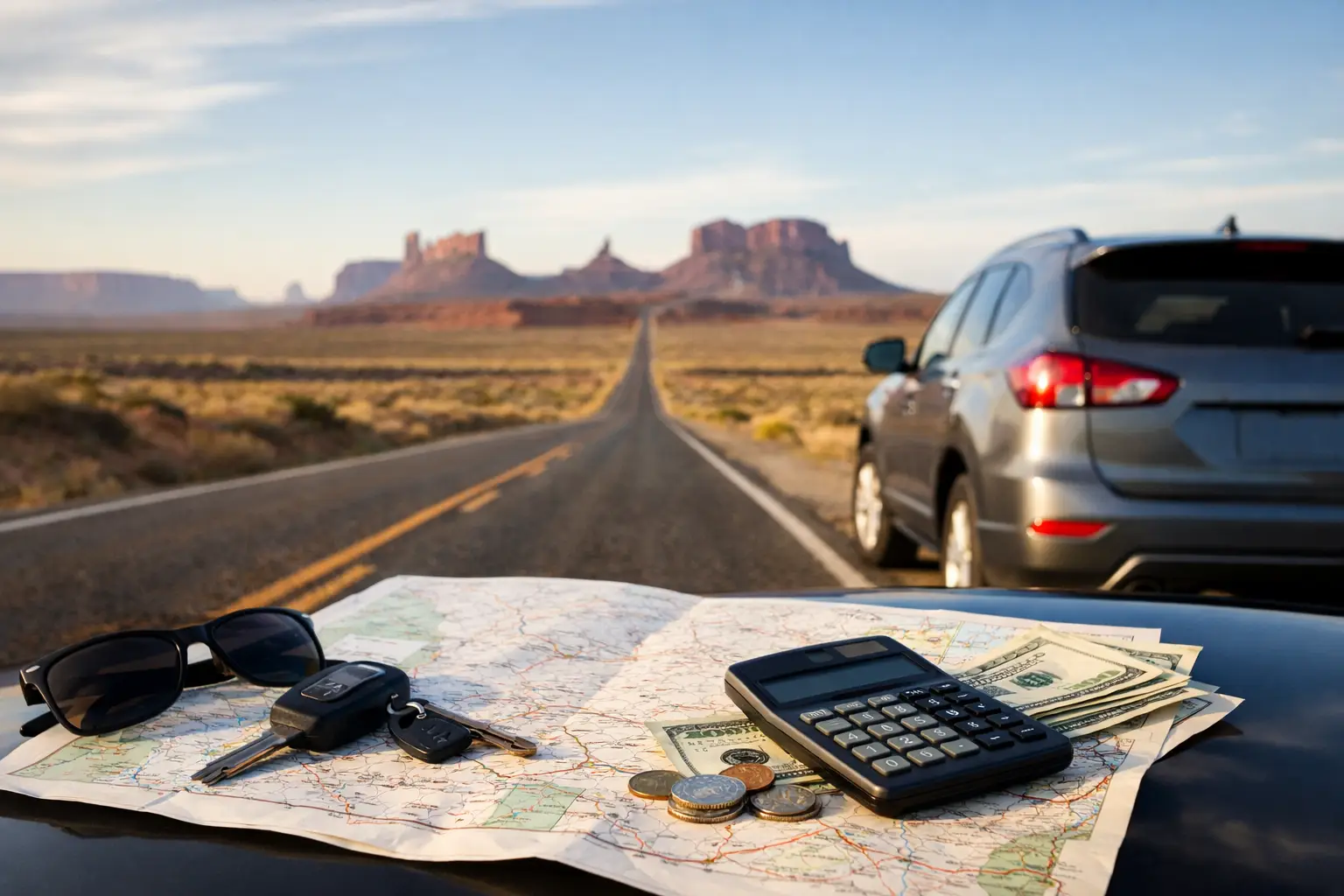
Route 66 Trip Cost by Car: Real Budget Guide
A Route 66 road trip can cost far less than people expect - or quite a bit more - depending on how you want the road to feel. If you are wondering about route 66 trip cost by car, the biggest truth is simple: this journey stretches across nearly 2,500 miles of diners, neon signs, desert horizons, old motels, and unexpected detours, so your budget follows your travel style.
Some travelers want the classic drive with roadside motels, long lunches in historic towns, and a few memorable upgrades along the way. Others want to cover ground efficiently, keep hotel costs low, and treat the trip like a great American crossing. Both are valid. Route 66 has always belonged to people chasing freedom in their own way.
What does a Route 66 trip cost by car?
For most travelers, a full Route 66 drive by car lands somewhere between $2,500 and $6,000 for two people, not including flights to the start or from the finish if needed. That range usually covers fuel, lodging, food, attraction stops, and the everyday spending that naturally happens on a cross-country adventure.
A leaner budget is possible if you choose lower-cost motels, travel outside peak season, and avoid expensive city-center stays. A more comfortable budget rises quickly if you prefer boutique hotels, longer stays in key towns, nicer dinners, and a rental car instead of using your own vehicle.
The real question is not just how much Route 66 costs. It is what kind of trip you want to remember.
The biggest costs on a Route 66 car trip
Fuel
Fuel is usually one of the easier costs to estimate. Route 66 from Chicago to Santa Monica runs roughly 2,400 to 2,500 miles, but most travelers do more once they add scenic loops, small-town explorations, and side trips to places like the Grand Canyon, Petrified Forest, or Cadillac Ranch.
If your full drive ends up around 2,700 miles and your car averages 30 miles per gallon, you will use about 90 gallons of gas. At around $3.50 to $4.50 per gallon, that puts fuel roughly between $315 and $405. If you are driving a larger SUV that gets 20 miles per gallon, fuel can climb closer to $475 to $600 or more.
That is why the car itself matters so much. A comfortable road trip vehicle can make long days easier, but lower fuel efficiency changes the math fast.
Hotels and motels
Lodging usually becomes the largest part of the budget. On Route 66, that is not always a bad thing. Part of the magic lives in the old motor courts, retro neon, family-run roadside inns, and historic hotels that still carry the spirit of the Mother Road.
If you book simple chain motels or budget properties, you might spend $90 to $130 per night. Mid-range stays often fall between $140 and $220 per night, while more character-rich historic properties or high-demand city nights can go well beyond that.
For a 14-night trip, two travelers could spend around $1,260 on the low end, around $2,100 to $3,000 in the mid-range, or more if the journey includes premium stays. The trade-off is obvious. Cheaper rooms save money, but the right historic motel can become one of the stories you talk about for years.
Food and drinks
Food on Route 66 can be wonderfully flexible. You can keep things modest with diner breakfasts, casual lunches, and the occasional supermarket stop. You can also lean into the experience with steakhouse dinners, classic soda fountains, local barbecue, and those irresistible pie stops that somehow become part of the itinerary.
A practical daily food budget for two might range from $60 to $90 if you keep things relaxed and simple. A more comfortable number is often $100 to $160 per day for two, especially if you like sitting down for dinner and enjoying local places rather than rushing through with convenience-store meals.
Over two weeks, that can mean roughly $840 to $2,200 depending on your habits. Food is one of the most personal parts of this trip, so this is where budgets vary widely.
Attractions and extras
Many of the most memorable Route 66 moments cost little or nothing. You do not pay to enjoy a sunset in the Arizona desert, walk an old main street, or photograph giant roadside signs glowing at dusk.
Still, extras add up. Museums, national park entry fees, parking, souvenir shopping, guided experiences, and occasional tolls can push the total higher than expected. A reasonable estimate is $200 to $600 for two over the course of the trip, though that number can rise if you collect memorabilia or build in major side excursions.
How trip length changes the budget
A faster Route 66 schedule can lower hotel and food costs, but it can also make the trip feel rushed. If you drive it in 10 days, you may spend less overall, yet miss some of the small towns and slow moments that give the road its heart.
A 14- to 16-day trip usually feels more balanced. You have time to wander, stop for photos, enjoy a real lunch instead of eating in the car, and notice the shift from Illinois farmland to New Mexico mesas and California desert light. That extra time costs more, but it often delivers a richer experience.
There is no perfect answer here. Some travelers want the full cross-country sweep. Others want enough breathing room to hear the jukebox, talk to locals, and linger when a place surprises them.
Budget examples for two travelers
Budget-conscious trip
If two people drive their own fuel-efficient car, choose mostly budget lodging, eat casually, and keep paid attractions limited, a Route 66 trip may come in around $2,500 to $3,200 total. That usually means watching hotel rates carefully and avoiding high-cost upgrades.
Mid-range classic Route 66 experience
This is where many couples land. With a mix of comfortable motels, a few historic stays, regular restaurant meals, attraction stops, and some room for spontaneous spending, the total often sits around $3,500 to $5,000 for two.
That range usually feels realistic without feeling restrictive. It lets you enjoy the road rather than manage every dollar at every stop.
Comfort-first trip
If you prefer standout hotels, a larger rental vehicle, better dining, and a slower pace with extra nights in favorite places, the trip can move past $6,000 for two. For some travelers, that is the right call. Route 66 is not just transportation. It is the experience itself.
Should you use your own car or rent one?
Using your own car is often the cheaper option if it is reliable and road-trip ready. You avoid rental fees, and you already know how the vehicle feels on long drives. But you do put significant mileage and wear on it, and maintenance becomes part of the real cost.
A rental car adds convenience and peace of mind, especially for international visitors or travelers flying into the start point. Yet that convenience can substantially change your route 66 trip cost by car once you include daily rental rates, insurance, one-way drop fees, and fuel.
For some travelers, renting is worth every penny. For others, driving their own well-maintained car is the smartest budget move on the board.
What people forget to budget for
The hidden costs are rarely dramatic on their own. It is the accumulation that gets you. Laundry, snacks, coffee stops, parking in larger cities, travel insurance, upgraded room choices after a long day, and impulse purchases from old trading posts all have a way of joining the bill.
Then there is the emotional side of the road. You may plan to drive straight through a town and end up staying the night because the neon sign outside an old motel catches you at exactly the right moment. That is Route 66. It invites you to loosen your grip on the schedule.
How to keep costs down without flattening the experience
The smartest budget travelers do not cut everything. They choose where the memories matter most.
Save money by traveling in shoulder season, booking some nights early, and limiting expensive stays in major cities. Share larger portions at diner stops, mix simple meals with special dinners, and map fuel stops with some awareness of regional price differences.
But do not trim the soul out of the trip. One historic motel, one great local meal, and one unplanned detour can be worth more than the money you saved by saying no to everything.
That is especially true on a road as storied as this one. Route 66 was never just about reaching California. It was about motion, reinvention, and the feeling that something unforgettable might be waiting after the next curve.
For travelers who want the freedom of the open road without spending weeks building the route, Route 66 Tours INC has seen firsthand how much smoother the experience becomes when the planning matches the dream. The budget matters, of course. So does knowing where the real value lives.
If you are pricing this journey now, give yourself a little room beyond the strict minimum. Not because the road is expensive, but because some of its best moments cannot be scheduled with perfect efficiency. A good Route 66 budget does more than cover the miles - it leaves space for the story.