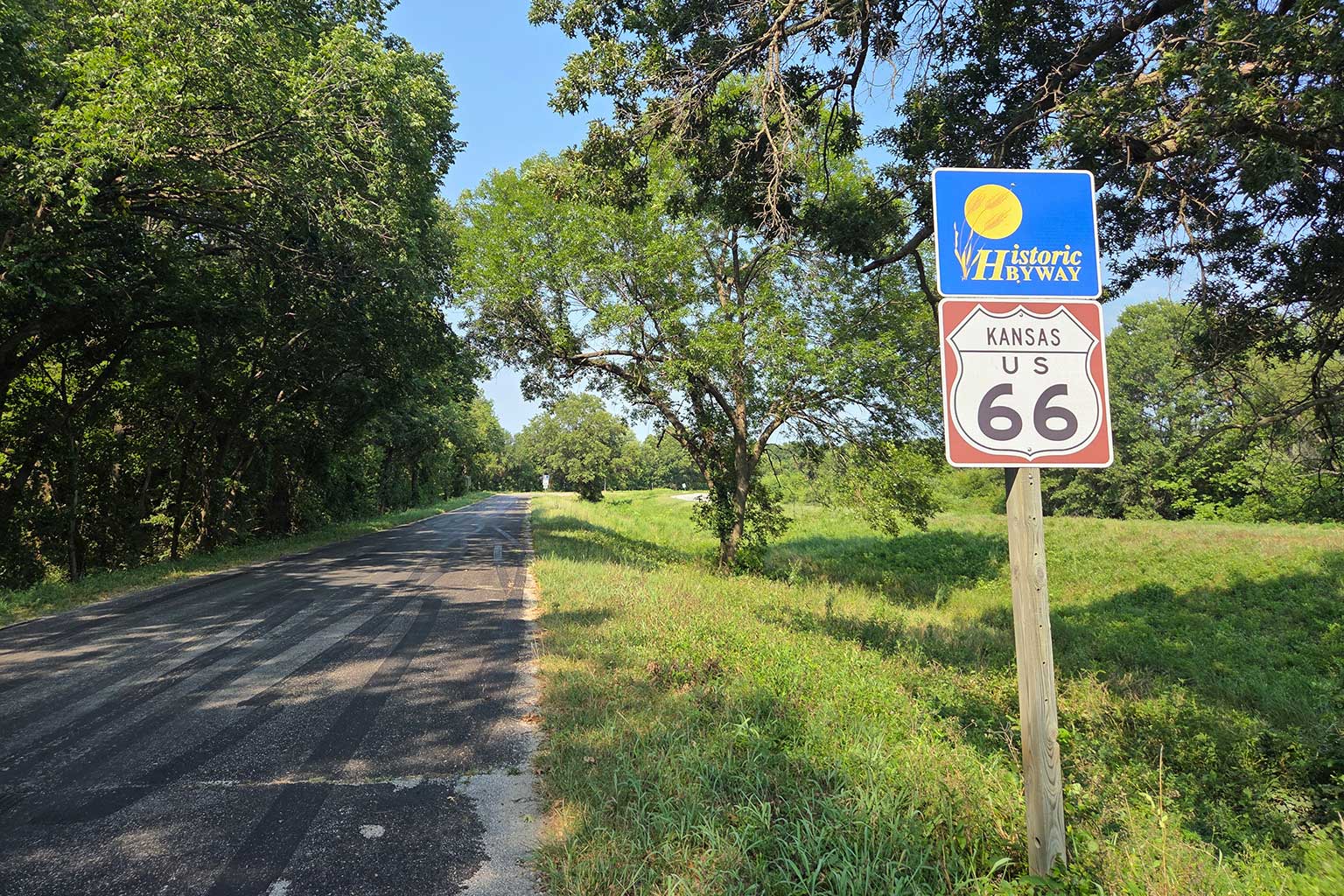
The first neon sign outside Chicago can make Route 66 feel like a simple line on a map. Then you reach a restored gas station, hear a local story over pie, or watch the desert turn copper near Kingman, and the question changes. If you are wondering how long a Route 66 trip is, the honest answer is: long enough to let America reveal itself, and short enough to leave you wanting one more mile.
The historic route runs roughly 2,400 miles from Chicago, Illinois, to Santa Monica, California, crossing eight states and a remarkable range of landscapes. You can technically cover the distance in a little over a week. But a full Route 66 journey is not a race between two endpoints. It is a road trip made of detours, diner stools, motel signs, old bridges, music, conversations, and moments when the schedule should wait.
How Long Is a Route 66 Trip in Real Life?
For most travelers, two to three weeks is the sweet spot for traveling the full route. Two weeks gives you a rich, energetic cross-country adventure. Three weeks lets the road breathe, with more time for historic towns, national parks, roadside stops, and rest days.
A 10-day trip can work for travelers with limited vacation time, especially if they are comfortable with longer driving days and select their stops carefully. It delivers the great sweep of Route 66, from the Midwest through the Texas Panhandle, New Mexico's high desert, Arizona's red rock country, and California's final run to the Pacific. The trade-off is that many days will be built around getting from one overnight stop to the next.
At the other end, a four-week journey is for travelers who want to move at a leisurely pace or combine Route 66 with deeper exploration. This may include extra time in Chicago, St. Louis, Santa Fe, the Grand Canyon region, Las Vegas, or Los Angeles. It is also a wise choice for riders who prefer shorter days in the saddle, or for anyone who wants room for weather changes and unexpected discoveries.
The original alignment of Route 66 has changed many times since the highway opened in 1926. Some sections are now local roads, some are unpaved or interrupted, and others have been replaced by interstate. That is part of its character. The miles on your odometer will often exceed the historic point-to-point distance because the best experience follows the surviving road, not just the fastest road.
The Best Route 66 Trip Lengths
10 days: The fast, unforgettable crossing
Ten days is a bold pace. Expect to cover roughly 240 to 300 miles on many travel days, with a few longer stretches where the old road is fragmented. This version is ideal for confident road trippers who want the full Chicago-to-Santa Monica story and do not mind early starts.
You will still have time for signature experiences: the Art Deco architecture and Route 66 beginnings in Chicago, the Chain of Rocks Bridge near St. Louis, Tulsa's roadside character, the wide-open Oklahoma plains, Cadillac Ranch in Amarillo, Santa Fe's distinctive Southwest spirit, the neon of Tucumcari, and the extraordinary Arizona and California desert landscapes.
What you give up is spontaneity. A 10-day schedule leaves less time to linger at museums, take scenic side trips, or spend an unplanned afternoon in a small town. It can be thrilling, but it is closer to an expedition than a relaxed vacation.
14 to 16 days: The classic full-route journey
For many first-time travelers, two weeks is the best answer to how long a Route 66 trip should be. You can usually keep daily driving to a more comfortable range while making space for the places that turn a good road trip into a lasting memory.
This pace allows for a little more than a photo stop in the towns that give Route 66 its soul. You can sit down for breakfast, walk a historic downtown, talk with the people preserving a vintage motel or trading post, and arrive before dark often enough to enjoy the evening. On a motorcycle, that matters even more. A day of big skies and two-lane roads feels far better when it ends with enough energy for a cold drink, good food, and stories with fellow travelers.
A two-week plan also offers flexibility. If rain rolls in across Missouri or Oklahoma, if desert heat calls for an earlier finish, or if a favorite stop deserves another hour, the trip does not unravel. That breathing room is one of the most valuable luxuries on Route 66.
21 days: The road-trip dream at its fullest
Three weeks gives Route 66 the pace it deserves. Rather than treating every attraction as a checkpoint, you can build in rest days and meaningful side adventures. Spend an extra night in a city with live music. Take time to visit a national park. Pull over when the light is perfect instead of watching it disappear through the windshield.
This is a wonderful rhythm for couples, groups, and travelers coming from overseas. Jet lag, unfamiliar driving conditions, and the sheer scale of the American West are easier to enjoy when the itinerary is not packed too tightly. It also suits travelers who prefer a car tour with the comfort of air conditioning and extra luggage space, as well as motorcycle riders who want to savor every state rather than simply claim it.
What Changes the Length of Your Route 66 Adventure?
The vehicle matters, but not in the way many people expect. A car can cover interstate miles quickly and provides shelter from rain, wind, and heat. It is often the practical choice for travelers seeking flexibility, comfort, and lower overall costs. Yet a car trip still takes time if you want to follow the historic route and enjoy the stops.
On a motorcycle, the physical experience is more immediate. You smell the rain before it arrives, feel the temperature change as you climb in elevation, and understand the scale of the plains and deserts in a deeply personal way. Daily mileage may be similar to a car tour, but smart motorcycle itineraries allow more recovery time, particularly in hot weather or during long stretches of open road.
Your starting point also changes the answer. Travelers who cannot commit to the entire route can choose a section and still have a powerful experience. Chicago to Oklahoma City makes a strong one-week Midwest journey. Oklahoma City to Santa Fe offers classic roadside Americana and the transition into the Southwest. Santa Fe to Santa Monica can be a magnificent 7- to 10-day adventure through New Mexico, Arizona, and California.
Season deserves a place in the plan as well. Spring and fall are usually the most forgiving seasons for a full crossing, although conditions vary dramatically by state. Summer can bring serious heat in the Southwest, while early spring or late fall may bring cold, wind, or storms in the Midwest. A sensible itinerary does not pretend every day will be perfect. It leaves room to adjust.
Do Not Plan Route 66 Like an Interstate Drive
The fastest route between Chicago and Santa Monica is not Route 66. If you use only the interstate, you will miss many of the places that make the journey worth taking in the first place. Historic alignments may pass through downtown districts, farm country, former mining towns, and stretches of desert where there is no billboard demanding your attention.
That is why daily mileage alone can be misleading. Two hundred miles on the old road, with stops and scenic sections, may fill a day more completely than 400 miles on an interstate. The right pace is not about proving endurance. It is about having enough time to recognize the moments you came for.
At Route 66 Tours INC, we have seen travelers arrive with a checklist and leave with a collection of stories they never expected: a sunrise ride, a jukebox playing the right song, a stranger pointing out a forgotten landmark, or the first sight of the Pacific after weeks on the road.
Choose the Time That Lets You Feel the Journey
If 10 days is all you have, go. A focused Route 66 trip can still be one of the great adventures of your life. If you can take two weeks, you will find a more balanced pace. If three weeks are possible, give yourself the gift of unhurried miles and the freedom to follow a good recommendation when it appears.
Route 66 has always been more than pavement. Leave enough time for the places between the planned stops, because that is where the road usually becomes yours.